


Main Vaapas Aaunga Movie Review: Imtiaz Ali’s Partition Romance Captures Poetry in Separation
Imtiaz Ali’s signature cinematic canvas has long been defined by the profound ache of longing, the transformative power of travel, and the agonizing beauty of incomplete love stories. With his latest directorial venture, Main Vaapas Aaunga (2026), Ali anchors his philosophical romanticism within one of the most volatile and deeply scarred chapters of South Asian history: the 1947 Partition of India. Co-written with Nayanika Mahtani, the film moves beyond standard historical trauma to deliver a sweeping, intergenerational epic that interrogates memory, identity, and the enduring nature of an unbroken promise.
Released theatrically on June 12, 2026, the film marks a powerful artistic milestone. It brings together an extraordinary ensemble cast—including Diljit Dosanjh, Sharvari Wagh, Vedang Raina, and the legendary Naseeruddin Shah—set to a hauntingly brilliant score by master composer A.R. Rahman. The result is a layered, poignant, and visually stunning piece of cinema that stands out as a major milestone for Hindi film in 2026.
Main Vaapas Aaunga (2026): Key Details and Production Credits
For cinephiles and industry observers tracking the film’s trajectory, the key production details are outlined below:
| Attribute | Specification |
| Director | Imtiaz Ali |
| Screenplay | Imtiaz Ali, Nayanika Mahtani |
| Producers | Sameer Nair, Deepak Segal, Mohit Choudhary, Shibasish Sarkar |
| Production Houses | Applause Entertainment, Birla Studios, Window Seat Films |
| Lead Cast | Diljit Dosanjh, Naseeruddin Shah, Sharvari Wagh, Vedang Raina |
| Supporting Cast | Banita Sandhu, Rajat Kapoor, Sanjay Suri, Anjana Sukhani |
| Music Composer | A.R. Rahman |
| Lyricist | Irshad Kamil |
| Cinematographer | Sylvester Fonseca |
| Editor | Aarti Bajaj |
| Release Date | June 12, 2026 |
| Running Time | 167 minutes |
| Language | Hindi |
Full Plot Synopsis: A Tale of Two Eras and Broken Borders
The narrative structure of Main Vaapas Aaunga effortlessly transitions between two parallel timelines, bridging the contemporary era with the agonizing days of 1947.
[Present Day] Elderly Keenu (Naseeruddin Shah) battles fading memories in India.
      │
      ▼ (Flashback via Memories)
[1947 Sargodha] Young Ishar "Keenu" Singh (Vedang Raina) falls in love with Afsana / Jiya (Sharvari).
      │
      ▼ (The Fracture)
Partition forces a brutal separation; Ishar leaves but promises: "Main Vaapas Aaunga."
      │
      ▼ (The Modern Connection)
Grandson / Guardian figure (Diljit Dosanjh) uncovers the past to help Keenu find closure.
The film opens in the present day, centering on an elderly man named Keenu (Naseeruddin Shah) who is struggling with advanced dementia. As his immediate reality slips away, his mind becomes increasingly anchored to a singular, vivid chapter of his youth. His internal world lives entirely in the town of Sargodha (now in Pakistan) during the months leading up to August 1947.
In the flashback timeline, a young Ishar Singh, affectionately nicknamed Keenu (played with vulnerable intensity by Vedang Raina), falls into a deep, consuming romance with Afsana, also known as Jiya (Sharvari Wagh). Their bond develops against a backdrop of escalating communal tensions as the line dividing a subcontinent is drawn. When the geopolitical fracture of Partition occurs, chaos ensues. Homes are uprooted, families are destroyed, and the lovers are violently separated across the newly formed borders. As he is forced away, young Ishar leaves Jiya with a desperate, fierce declaration that echoes across the decades: “Main Vaapas Aaunga” (I will return).
In the modern timeline, a companion figure played by Diljit Dosanjh acts as the emotional anchor for the aging Keenu. Recognizing that the old man’s erratic behavior is actually a deep psychological urge to fulfill a 79-year-old vow, Dosanjh’s character embarks on a journey to piece together the fractured memories, seeking out what remains of Jiya and the world they left behind. The parallel narratives examine how geopolitical trauma shapes identity across generations, showing that while lines can divide land, they cannot sever the emotional ties to a true home.
Detailed Critique: Direction, Themes, and Performances
Direction and Screenplay: Imtiaz Ali’s Mature Vision
Imtiaz Ali’s directorial execution in Main Vaapas Aaunga represents a highly mature evolution of his filmmaking style. While his earlier works (Jab We Met, Rockstar, Tamasha) focused on internal, self-contained emotional crises, this film successfully scales those personal stakes against a massive historical backdrop. Co-written with Nayanika Mahtani, the screenplay avoids the typical traps of historical melodrama. Instead of leaning into overt political bias, the writing approaches Partition as a profound human tragedy. Ali treats the dual timelines with extreme care; the transitions edited by Aarti Bajaj feel seamless, ensuring the viewer never experiences emotional whiplash while jumping between eras.
Masterful Performances Across Generations
The performances form the true spine of the film. Naseeruddin Shah delivers a masterclass in physical acting, capturing the disorientation, sudden clarity, and deep-seated grief of a man trapped in the labyrinth of his own fading mind. Matching his emotional weight is Vedang Raina, who plays the younger version of the character. Raina brings a raw, old-world innocence to Ishar, making his eventual heartbreak feel devastatingly real.
Sharvari Wagh delivers a career-defining performance as Afsana/Jiya. She portrays her character with a remarkable balance of warmth and resilience, avoiding the passive tropes often written into historical romances.
Diljit Dosanjh is brilliant as the contemporary anchor. He infuses the heavy atmosphere with his innate, grounded warmth, providing a necessary layer of empathy that keeps the modern timeline engaging.
Visual and Auditory Craftsmanship
Visually, the film is an absolute triumph. Cinematographer Sylvester Fonseca captures pre-Partition Sargodha with warm, nostalgic golden tones that sharply contrast with the muted, cooler shades of the present day. The attention to historical detail—from the period-accurate costumes designed by Sheetal Iqbal Sharma to the rustic production design—creates a deeply immersive experience.
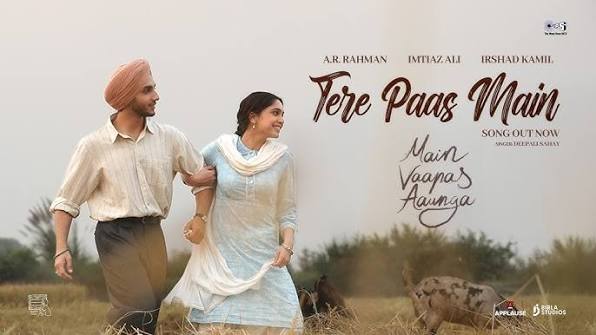
The audio landscape is equally exceptional. A.R. Rahman’s musical score acts as a narrative force of its own, with lyrics by Irshad Kamil that perfectly capture the film’s core themes. Tracks like “Kya Kamaal Hai” and the beautifully melancholic “Maskara” heighten the emotional resonance of key scenes, while the haunting recurring theme of “Tere Paas Main” highlights the deep sense of longing that defines the movie.
Strengths and Weaknesses
Strengths
-
Nuanced Treatment of Partition: The film depicts the tragedy of communal displacement with immense sensitivity, avoiding political bias to focus entirely on human cost.
-
Exceptional Casting: The casting choices seamlessly connect the two timelines, highlighted by Naseeruddin Shah’s brilliant performance and Sharvari’s strong screen presence.
-
Brilliant Soundtrack: A.R. Rahman’s score and Irshad Kamil’s lyrics integrate perfectly into the narrative, serving as a direct extension of the characters’ internal voices.
-
Fluid Transitions: The seamless editing across timelines keeps the complex story focused and easy to follow.
Weaknesses
-
Deliberate Pacing: At 167 minutes, the film’s slower, introspective pace in the second half may test the patience of viewers looking for a standard, fast-moving drama.
-
Overly Poetic Dialogue: At times, the dialogue drops into highly stylized poetry, which occasionally softens the raw impact of its most tense moments.
Final Verdict
Main Vaapas Aaunga stands as a triumphant entry in Imtiaz Ali’s filmography, showing a director operating at the peak of his creative power. It is far more than a simple period romance; it is a profound meditation on the permanence of memory and the resilience of the human spirit against historical upheaval. Propelled by outstanding performances from its ensemble cast and elevated by A.R. Rahman’s timeless score, the film is a deeply moving cinematic experience. For those who appreciate thoughtful, character-driven cinema that lingers long after the credits roll, this film is an absolute must-watch.