


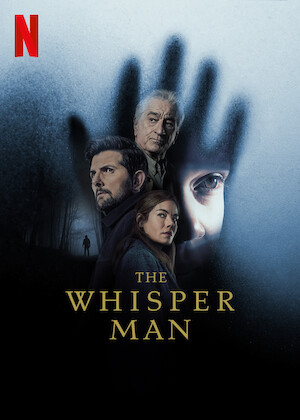
The Whisper Man (2026) Review: A Chilling Netflix Serial-Killer Thriller Haunted by Family Trauma
Meta Title: The Whisper Man (2026) Review: Is Netflix’s Thriller Worth Watching?
Meta Description: Read our The Whisper Man (2026) review. Robert De Niro, Adam Scott, Michelle Monaghan and Michael Keaton lead Netflix’s dark serial-killer thriller based on Alex North’s novel.
Focus Keyword: The Whisper Man 2026 review
Secondary Keywords: The Whisper Man review, The Whisper Man Netflix review, The Whisper Man movie review, Robert De Niro The Whisper Man, Adam Scott The Whisper Man, The Whisper Man ending, The Whisper Man cast, is The Whisper Man worth watching
Rating: 3/5
Netflix’s The Whisper Man (2026) arrives with virtually everything a psychological crime thriller could want: a disturbing serial killer, a missing child, an ominous rhyme, unresolved family trauma and an unusually accomplished cast led by Robert De Niro, Adam Scott, Michelle Monaghan and Michael Keaton.
Directed by James Ashcroft and adapted from Alex North’s bestselling 2019 novel, The Whisper Man attempts to revive the brooding serial-killer thrillers that flourished throughout the 1990s. Its premise promises something between a police procedural, psychological horror film and supernatural mystery.
The results are considerably more uneven.
The Whisper Man is atmospheric enough to hold attention and occasionally delivers the unsettling tension its premise demands. Adam Scott gives the film its strongest emotional foundation, while De Niro brings understated gravity to its generational drama. Michael Keaton, meanwhile, makes a memorable impression as convicted killer Frank Carter.
Yet the film rarely transforms its intriguing ingredients into something genuinely distinctive. Familiar serial-killer conventions, uneven pacing and an overcrowded screenplay prevent The Whisper Man from becoming as frightening or psychologically complex as it could have been.
Still, for viewers looking for a dark, old-fashioned mystery rather than a revolutionary reinvention of the genre, there is enough here to make Netflix’s latest thriller an intriguing weekend watch.
The Whisper Man (2026) Movie Details
| Details | Information |
|---|---|
| Movie | The Whisper Man |
| Release Date | August 28, 2026 |
| Genre | Crime, Mystery, Psychological Thriller, Drama |
| Director | James Ashcroft |
| Screenplay | Ben Jacoby and Chase Palmer |
| Based On | The Whisper Man by Alex North |
| Cast | Robert De Niro, Adam Scott, Michelle Monaghan, Michael Keaton, Hamish Linklater, Owen Teague |
| Runtime | 1 hour 51 minutes |
| Rating | R |
| Language | English |
| Streaming Platform | Netflix |
The Whisper Man Review: A Dark Mystery Built Around Fathers and Sons
The most interesting thing about The Whisper Man is not necessarily its killer.
It is the relationship between fathers and sons.
The film uses a serial-killer investigation as the framework for a much more intimate examination of grief, parenthood, guilt and emotional inheritance.
Adam Scott plays Tom Kennedy, a widowed crime writer attempting to move forward after his wife’s death while raising his eight-year-old son, Jake. Their relationship is loving but strained by grief. Jake is withdrawn and imaginative, while Tom struggles with the enormous responsibility of becoming his son’s only parent.
A fresh start should offer them stability.
Instead, it places Jake directly in the path of a nightmare.
When the boy disappears, similarities emerge between his abduction and a notorious series of murders committed years earlier by Frank Carter, the convicted serial killer known as the Whisper Man.
Tom consequently turns toward someone he has spent years avoiding: his estranged father, Pete Willis.
Played by Robert De Niro, Pete is a retired detective who knows the Whisper Man case better than almost anyone because he was involved in bringing Carter to justice.
Suddenly, three generations of one troubled family become connected through a crime that should have ended decades earlier.
It is here that The Whisper Man finds its strongest material.
The Whisper Man Plot Synopsis
Tom Kennedy is already emotionally vulnerable when the story begins.
After losing his wife, Tom relocates with Jake in the hope that changing their surroundings will help both father and son recover. Jake, however, continues behaving in ways that leave Tom concerned. He talks to an apparently imaginary girl and appears unusually sensitive to things happening around him.
Meanwhile, Detective Amanda Beck, played by Michelle Monaghan, becomes involved in an investigation surrounding disturbing crimes against children.
The evidence eventually begins pointing toward an uncomfortable possibility.
The methods resemble those associated with Frank Carter.
Carter became infamous for abducting and murdering young boys, developing the frightening reputation that eventually earned him the nickname the Whisper Man. His crimes became embedded in local folklore, complete with a sinister childhood rhyme warning children of his presence.
There is one obvious problem with the theory that Carter has returned.
He is already imprisoned.
When Jake subsequently disappears, Tom’s personal tragedy becomes connected to that older investigation.
Desperate to recover his son, Tom is forced back into contact with Pete. The two men have years of unresolved resentment between them, but Jake’s disappearance gives them no choice except to confront both the immediate crisis and the history separating them.
Pete also realizes that the case he thought he had finished may contain unfinished business.
The investigation gradually develops into a race to understand who is recreating the Whisper Man’s methods, how the new crimes connect to Carter and whether Jake can be found before another child becomes part of the killer’s legacy.
Adam Scott Gives The Whisper Man Its Emotional Center
Adam Scott delivers the movie’s most important performance as Tom Kennedy.
Tom could easily have become another generic thriller protagonist: the desperate father running through dark corridors and demanding answers from police officers.
Scott gives him more vulnerability.
His performance communicates a man already exhausted by grief before the central nightmare even begins. The disappearance of Jake does not introduce fear into an otherwise stable existence; it adds another unbearable possibility of loss to someone who has already experienced one.
Scott is especially effective when Tom’s desperation becomes entangled with guilt.
There is an underlying question throughout the movie about whether parents can ever completely protect their children. Tom’s profession as a crime writer makes the situation even more ironic. He understands stories about violence intellectually, yet that knowledge offers little comfort when violence enters his own family.
The performance becomes increasingly intense as the investigation progresses, but Scott generally keeps Tom grounded enough for the audience to remain emotionally connected to him.
Robert De Niro Brings Quiet Weight to Pete Willis
Robert De Niro takes the opposite approach.
Where Scott frequently expresses Tom’s panic externally, De Niro makes Pete guarded and restrained.
Pete is a man who has spent decades carrying memories he cannot completely resolve. His involvement with the original Whisper Man investigation gave him professional authority but did not necessarily make him a successful father.
That contradiction is central to the character.
He could understand a murderer but struggled to understand his own son.
De Niro’s restrained performance works best when the movie focuses on this uncomfortable reality. Small gestures and silences reveal more about Pete than lengthy explanations would.
The screenplay could have explored the Tom-Pete relationship with greater depth, because it is easily one of the movie’s strongest dramatic ideas. Even so, Scott and De Niro create enough tension between them to give the investigation emotional stakes beyond discovering the killer’s identity.
Michael Keaton Makes Frank Carter Disturbingly Memorable
Michael Keaton’s appearance as Frank Carter gives The Whisper Man a different kind of energy.
Carter belongs to a familiar tradition of incarcerated cinematic serial killers whose physical confinement does little to diminish their psychological power.
The danger comes from conversation.
Keaton understands that kind of character immediately.
Rather than attempting to make Carter realistic in an understated sense, his performance embraces the unsettling theatricality surrounding him. The character has become a legend, and Keaton plays him as someone who understands the effect his reputation has on others.
His scenes provide some of the film’s most memorable moments.
The problem is that they also expose how conventional other portions of The Whisper Man can feel. Whenever Carter appears, the movie briefly develops the psychological menace suggested by its title. When he disappears, the narrative often returns to more predictable investigative mechanics.
Michelle Monaghan Grounds the Investigation
Michelle Monaghan brings necessary authority to Detective Amanda Beck.
Beck occupies the procedural side of the story, connecting the emotional experiences of Tom and Pete with the practical investigation into the missing children.
Monaghan delivers a controlled performance that prevents the police material from becoming excessively melodramatic.
However, Amanda occasionally feels more functional than fully developed.
The movie has several characters competing for limited screen time, and its strongest emotional focus clearly remains the Kennedy family. As a result, Amanda does not receive quite enough independent characterization to become as memorable as Monaghan’s performance suggests she could have been.
James Ashcroft Builds Dread Better Than Terror
Director James Ashcroft approaches The Whisper Man with considerable seriousness.
The film rarely attempts to become an outright horror movie. Instead, it creates tension through empty rooms, dark spaces, strange conversations and the recurring possibility that something dangerous exists just beyond what the characters can perceive.
This restraint occasionally works beautifully.
Children speaking to unseen figures are an established horror convention, but The Whisper Man uses the device effectively because the story continually leaves open different explanations.
Is something supernatural happening?
Is Jake processing grief through his imagination?
Or is somebody manipulating him?
That uncertainty generates some of the movie’s strongest suspense.
Unfortunately, the film does not sustain the same intensity throughout its 111-minute runtime.
Some sequences build genuine dread, while others become heavily dependent on familiar serial-killer storytelling devices. The investigation moves through clues, suspects and revelations without always developing the psychological complexity promised by the premise.
Cinematography and Visual Style
Cinematographer Peter Deming gives The Whisper Man an appropriately subdued visual palette.
Interiors often feel enclosed, while nighttime sequences emphasize isolation and uncertainty. Houses, basements and ordinary suburban environments become threatening without requiring extravagant production design.
The visual approach complements the story’s obsession with hidden danger.
The movie is less successful when its muted aesthetic becomes visually monotonous. Psychological thrillers benefit from darkness, but darkness alone does not automatically create atmosphere.
The strongest images are those connected specifically to Jake’s perspective, because they make familiar environments feel subtly wrong rather than merely dim.
Colin Stetson’s Score Strengthens the Unease
The music by Colin Stetson contributes significantly to the film’s atmosphere.
The Whisper Man depends heavily on sound because the title itself emphasizes something heard rather than seen.
Whispers, silence and distant noises become important tools for building suspense.
The score works best when it supports that uncertainty instead of announcing danger too aggressively. Several scenes derive their tension from waiting for something to happen, and the sound design helps extend those moments.
The Whisper Man’s Biggest Strength: Family Trauma
The film’s strongest thematic element is its treatment of generational trauma.
Tom fears failing Jake.
Pete already believes, whether he openly admits it or not, that he failed Tom.
Frank Carter represents a grotesque distortion of fatherhood and influence.
These parallel relationships give The Whisper Man a thematic structure more interesting than its conventional serial-killer plot initially suggests.
The movie repeatedly asks what fathers pass to their sons.
Protection?
Fear?
Trauma?
Violence?
Silence?
The investigation becomes most compelling when these questions overlap.
Pete cannot simply solve another crime. He must confront what his dedication to previous investigations may have cost his family.
Likewise, Tom cannot simply rescue Jake. He must understand his son as an individual whose grief and fears cannot be solved merely through parental protection.
Where The Whisper Man Falls Short
The primary weakness is familiarity.
Anyone who has watched a substantial number of serial-killer thrillers will recognize many of the ingredients.
There is a killer with a memorable nickname. There is an ominous rhyme. There are disturbing crimes from the past. There is a retired investigator haunted by an old case. There are conversations with an imprisoned murderer. There is a vulnerable child who appears capable of perceiving things adults cannot.
None of those devices are inherently problematic.
The difficulty is that The Whisper Man does not consistently reinvent them.
The screenplay by Ben Jacoby and Chase Palmer occasionally feels overloaded as it attempts to balance grief drama, police procedural, serial-killer mystery, supernatural ambiguity and father-son reconciliation.
Individual pieces are compelling, but they do not always form a seamless whole.
The Whisper Man Strengths and Weaknesses
Strengths
- Strong central performance from Adam Scott
- Robert De Niro adds emotional weight and restraint
- Michael Keaton makes a memorable impression as Frank Carter
- Effective father-son themes
- Several genuinely unsettling sequences
- Strong sound design and atmospheric music
- Intriguing mixture of crime thriller and supernatural ambiguity
- Accessible mystery that maintains interest throughout much of the runtime
Weaknesses
- Familiar serial-killer conventions
- Uneven pacing
- Several supporting characters feel underdeveloped
- Psychological ideas are sometimes more interesting than their execution
- The supernatural material could have been integrated more smoothly
- Some twists are easier to anticipate than intended
- The movie never fully capitalizes on its exceptional cast
Is The Whisper Man Scary?
The Whisper Man is better described as unsettling than terrifying.
There are disturbing themes involving children, serial murder and abduction, along with threatening imagery and occasional jump scares.
However, the movie primarily operates as a psychological crime thriller.
Its most effective scares come from implication: a child talking to somebody who may not exist, an unexplained sound in another room, or the possibility that a supposedly closed criminal case remains active.
Viewers expecting relentless horror may therefore find it restrained.
Those who prefer slow-building mystery and psychological dread are more likely to appreciate its approach.
Is The Whisper Man Worth Watching?
Yes, with measured expectations.
The Whisper Man is worth watching primarily for audiences who enjoy atmospheric serial-killer mysteries and actor-driven crime thrillers.
It does not reinvent the genre, nor does it consistently reach the level suggested by its impressive cast and disturbing premise.
Yet Adam Scott gives the story genuine emotional urgency, Robert De Niro provides understated dramatic weight, and Michael Keaton injects welcome menace whenever Frank Carter enters the narrative.
The film also works better when viewed as a family drama disguised as a serial-killer mystery.
Its real subject is not simply whether the Whisper Man has returned.
It is whether parents and children can escape the damage passed between generations.
The Whisper Man Review Verdict
The Whisper Man is an atmospheric but uneven psychological thriller elevated by its performances and compelling father-son themes.
James Ashcroft creates several moments of genuine unease, while the combination of Adam Scott, Robert De Niro, Michelle Monaghan and Michael Keaton gives the adaptation considerable dramatic credibility.
Its weaknesses are difficult to ignore.
The screenplay depends too heavily on familiar serial-killer conventions, supporting characters sometimes receive insufficient development, and the movie occasionally feels less distinctive than its unsettling premise deserves.
But there is enough emotional substance beneath the genre machinery to keep The Whisper Man from becoming merely another disposable killer mystery.
Adam Scott supplies its heart. De Niro gives it history. Keaton gives it menace.
And the unresolved pain connecting parents and children ultimately proves more interesting than the monster suggested by the title.
Final Rating: 3/5
Verdict: A solid, performance-driven Netflix psychological thriller that delivers atmosphere and emotional tension even when its mystery follows familiar territory.
Frequently Asked Questions About The Whisper Man
What is The Whisper Man about?
The Whisper Man follows widowed crime writer Tom Kennedy after his young son Jake is abducted. The disappearance appears connected to an old serial-killer case, forcing Tom to seek help from his estranged father, retired detective Pete Willis.
Who stars in The Whisper Man?
The film stars Adam Scott, Robert De Niro, Michelle Monaghan and Michael Keaton, with supporting performances from Hamish Linklater, Owen Teague, John Carroll Lynch and Acston Luca Porto.
Who plays the Whisper Man?
Michael Keaton plays Frank Carter, the convicted serial killer associated with the Whisper Man crimes.
Who directed The Whisper Man?
The Whisper Man was directed by James Ashcroft.
Is The Whisper Man based on a book?
Yes. The movie is based on Alex North’s bestselling 2019 novel The Whisper Man.
Is The Whisper Man based on a true story?
No. The Whisper Man is a fictional story adapted from Alex North’s novel rather than a true-crime case.
How long is The Whisper Man?
The Whisper Man has a runtime of approximately 111 minutes, or 1 hour and 51 minutes.
When was The Whisper Man released?
The movie was released for streaming on August 28, 2026.
Where can you watch The Whisper Man?
The Whisper Man is streaming on Netflix.
Is The Whisper Man a horror movie?
The Whisper Man contains horror elements, but it is primarily a psychological crime thriller and mystery drama. Its horror comes from child-abduction themes, disturbing imagery, supernatural ambiguity and psychological tension rather than constant conventional scares.
Is The Whisper Man worth watching on Netflix?
The Whisper Man is worth considering for viewers who enjoy serial-killer mysteries, psychological thrillers and darker family dramas. Its accomplished cast and unsettling atmosphere compensate for a story that sometimes relies heavily on familiar genre conventions.
Review Schema (JSON-LD)
{
  "@context": "https://schema.org",
  "@type": "Review",
  "name": "The Whisper Man (2026) Review",
  "reviewBody": "The Whisper Man is an atmospheric but uneven psychological crime thriller elevated by strong performances from Adam Scott, Robert De Niro and Michael Keaton. Its exploration of grief, fatherhood and generational trauma gives emotional substance to a serial-killer mystery that occasionally relies too heavily on familiar genre conventions.",
  "reviewRating": {
    "@type": "Rating",
    "ratingValue": "3",
    "bestRating": "5",
    "worstRating": "1"
  },
  "itemReviewed": {
    "@type": "Movie",
    "name": "The Whisper Man",
    "dateCreated": "2026",
    "datePublished": "2026-08-28",
    "duration": "PT1H51M",
    "contentRating": "R",
    "genre": [
      "Mystery",
      "Thriller",
      "Crime",
      "Drama"
    ],
    "director": {
      "@type": "Person",
      "name": "James Ashcroft"
    },
    "actor": [
      {
        "@type": "Person",
        "name": "Robert De Niro"
      },
      {
        "@type": "Person",
        "name": "Adam Scott"
      },
      {
        "@type": "Person",
        "name": "Michelle Monaghan"
      },
      {
        "@type": "Person",
        "name": "Michael Keaton"
      },
      {
        "@type": "Person",
        "name": "Hamish Linklater"
      },
      {
        "@type": "Person",
        "name": "Owen Teague"
      },
      {
        "@type": "Person",
        "name": "Acston Luca Porto"
      }
    ]
  },
  "author": {
    "@type": "Person",
    "name": "Editorial Staff"
  }
}