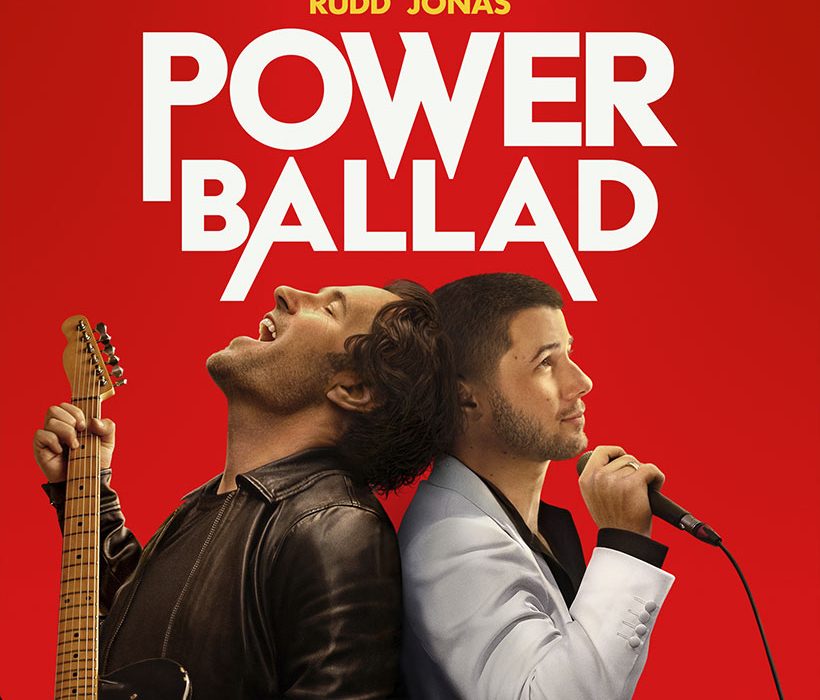
Sound, Ego, and Ownership: John Carney’s ‘Power Ballad’ Tackles Creative Betrayal in the Streaming Era
Irish auteur John Carney has carved out a unique, deeply resonant niche in contemporary cinema by treating songwriting not merely as a plot device, but as an act of spiritual survival. From the raw, street-level busker romance of Once (2007) to the infectious, suburban-adolescent escapism of Sing Street (2016), Carney’s films celebrate the collaborative spark of musical creation.
With his latest feature, Power Ballad (2026), Carney broadens his canvas, stepping away from the intimate streets of Dublin to examine the friction between artistic purity and the commercialized machinery of global pop stardom. Anchored by a compelling dual lead performance from Paul Rudd and Nick Jonas, the film navigates the murky waters of creative ownership, mid-life disillusionment, and the intoxication of a viral hit.
While it exchanges some of Carney’s signature low-fi melancholia for a sleeker, more mainstream comedic template, Power Ballad functions as an insightful, highly entertaining dissection of creative jealousy, identity, and the high cost of validation.
Power Ballad (2026): Key Production Details
For industry analysts and audiences tracking high-profile indie-crossover releases, the film’s structural specifications highlight an intriguing blend of Hollywood star power and Irish production roots.
| Production Attribute | Film Specification Data |
| Title | Power Ballad |
| Theatrical Release Date | May 29, 2026 (Limited) / June 5, 2026 (Wide) |
| Director | John Carney |
| Screenplay | John Carney, Peter McDonald |
| Running Time | 98 Minutes |
| Principal Cast | Paul Rudd, Nick Jonas, Marcella Plunkett, Havana Rose Liu, Jack Reynor |
| Cinematography | Yaron Orbach |
| Original Music | Gary Clark, John Carney |
| Production Houses | 30West, Screen Ireland, Likely Story, Treasure Entertainment |
| Distributor | Lionsgate |
Full Plot Synopsis: A Late-Night Jam and the Fight for a Legacy
The narrative foundation of Power Ballad addresses a universal nightmare within the creative community: the uncredited theft of an artistic epiphany.
The Meeting of Two Musical Worlds
Rick Power (Paul Rudd) is a middle-aged American rocker who relocated to Dublin fifteen years prior during a tour with his former band. His dreams of arena-sized success were permanently rerouted when he fell in love with Rachel (Marcella Plunkett), settled down in the Irish suburbs, and raised their daughter, Aja (Beth Fallon). Today, Rick satisfies his musical impulses as the frontman of “Bride and Groove,” a reliable but soul-crushing local wedding band that cycles through predictable top-40 covers. Though outward appearances suggest contentment, Rick harbors a quiet, lingering ache to create original art again.
His world abruptly collides with Danny Wilson (Nick Jonas), a fading former boy-band idol who is desperately clawing his way into a credible solo career. Danny is trapped in his own public image—paralyzed by writer’s block and terrified of becoming a cultural relic. Following a chance meeting after a local gig, Rick and Danny retreat to a late-night setting to talk shop and swap instruments. Fueled by alcohol and an unexpected sense of camaraderie, the pair construct a raw, profoundly emotional melody—a classic power ballad built around a chorus Rick has been workshopping for years.
[Rick's World: Small-scale pub gigs, suburban home, organic instrumentation]
                       ⬇ (The Late-Night Jam Session)
[Danny's World: High-stakes pop market, L.A. studios, algorithmic pressure]
The Betrayal and the Hit
The initial high of their collaboration evaporates months later. While Rick is still playing the local wedding circuit, Danny uses the stolen melody to construct his highly anticipated solo comeback single. The track explodes across streaming algorithms and social media, catapulting Danny straight back into the cultural zeitgeist and launching him into a major arena tour.
Rick’s name, however, is entirely absent from the credits. Danny has claimed sole authorship of the track, packaging it as a deeply personal artistic breakthrough to validate his solo career.
The Obsession for Recognition
Rather than descending into blind fury, Rick initially reacts with optimistic naivety, believing that reaching out to Danny directly will fix the “clerical error”. When he is systematically shut out by Danny’s publicists, legal defense, and corporate handlers, Rick’s mindset hardens. He initiates a relentless, escalating crusade to reclaim his intellectual property and his artistic identity.
As Rick’s pursuit of validation morphs into an all-consuming obsession, his domestic stability in Dublin begins to fracture. His family is forced to watch as he risks his actual life savings and personal relationships to fight an asymmetric war against a multi-million-dollar celebrity apparatus. The second half of the film develops into a psychological tug-of-war, exploring whether the preservation of self-respect is worth destroying the quiet life a person has spent over a decade building.
Detailed Critique: Performance, Direction, and Form
Direction and Screenplay: A Glossier, Broad-Minded Approach
John Carney’s collaborative script with Peter McDonald maintains the director’s signature humanism, but features a distinctly snappier, more commercially accessible pace than his previous endeavors. Power Ballad trades the handheld digital intimacy and rain-slicked naturalism of Once for a wider visual scope captured cleanly by cinematographer Yaron Orbach.
The primary strength of the direction lies in how it captures the act of creation. The centerpiece scene—the late-night composition of the ballad—is filmed with a loose, kinetic joy that reminds audiences exactly why Carney excels in this genre. However, the script occasionally struggles to balance its satirical skewering of the modern music business with the domestic family drama back in Ireland, dropping subplots abruptly to return to the central battle of egos.
Acting and Character Dynamics: Rudd and Jonas Break Type
The ultimate success of the production hinges on the fascinating, counter-intuitive chemistry between its two main stars.
-
Paul Rudd delivers a remarkably layered performance that steps away from his usual untroubled, charismatic charm. As Rick, Rudd balances mid-life anxiety, professional humiliation, and an impotent, simmering anger that prevents the character from becoming a simple, flat protagonist. He makes Rick’s obsessive drive completely understandable, capturing the panic of an aging artist who realizes his final shot at legacy has been stolen.
-
Nick Jonas is excellent as Danny, leaning heavily into a sharp, self-aware critique of a modern pop star archetype. Jonas resists the temptation to play Danny as a simple, mustache-twirling villain. Instead, he shows us a vulnerable, insecure man terrified of irrelevance, making the theft of the song feel like an act of survival rather than conscious malice.
-
Marcella Plunkett holds the emotional center of the film as Rachel, offering a grounded, realistic performance that anchors the narrative whenever the battle between the two male egos threatens to drift into absurd territory.
Visuals and Audio Integration
The film establishes an effective visual contrast between its two settings. Rick’s environment is framed with warm, organic earth tones—cluttered suburban kitchens, cramped vehicles, and the dim lighting of local community halls. Danny’s world is defined by high-contrast neon blues and sterile whites, accentuating the alienation of his massive, empty Los Angeles home.
Audio-visually, Gary Clark and John Carney’s soundtrack serves as a key narrative engine. The title song must be strong enough to justify an international lawsuit, and the composition succeeds, functioning simultaneously as an earnest acoustic confession and an over-produced, stadium-shaking electronic pop anthem.
Strengths and Weaknesses
Strengths
-
Subversive Casting: Utilizing Rudd’s likability to portray deep mid-life frustration and Jonas’s real-world pop background to critique celebrity culture results in brilliant performances.
-
Captivating Musical Anatomy: The central songwriting sequences elegantly dissect how a simple melody is created, deconstructed, and repackaged for commercial consumption.
-
Pacing and Engagement: At 98 minutes, the film features an airtight structure that avoids unnecessary subplots and narrative bloat.
Weaknesses
-
Diluted Emotional Resonance: By adopting a shinier, more mainstream Hollywood tone, the film loses some of the poignant, unvarnished emotional weight found in Once or Sing Street.
-
Convenient Narrative Resolutions: The third act leans heavily on conventional dramedy tropes, wrapping up complex legal and emotional conflicts a bit too cleanly.
Final Verdict
Power Ballad may not challenge the artistic heights of John Carney’s early masterpieces, but it stands as a highly watchable, witty, and surprisingly insightful look at modern creative friction. Powered by an exceptional performance from Paul Rudd and a smart, self-deprecating turn from Nick Jonas, the film provides an accessible and entertaining exploration of what happens when the songs we write to heal ourselves are commodified for global consumption.
Final Rating: 3.5 out of 5 Stars
Review Schema
{
  "@context": "https://schema.org/",
  "@type": "Review",
  "itemReviewed": {
    "@type": "Movie",
    "name": "Power Ballad",
    "image": "",
    "dateCreated": "2026",
    "director": {
      "@type": "Person",
      "name": "John Carney"
    },
    "actor": [
      {
        "@type": "Person",
        "name": "Paul Rudd"
      },
      {
        "@type": "Person",
        "name": "Nick Jonas"
      }
    ]
  },
  "reviewRating": {
    "@type": "Rating",
    "ratingValue": "3.5",
    "bestRating": "5",
    "worstRating": "1"
  },
  "author": {
    "@type": "Person",
    "name": "Film Critic"
  },
  "reviewBody": "John Carney's Power Ballad is a sharp-witted and highly entertaining exploration of artistic ownership in the modern age. Led by the stellar, subversive chemistry of Paul Rudd and Nick Jonas, it balances industry satire with genuine human drama, even if it trades a bit of Carney's signature indie grit for a glossier studio sheen."
}