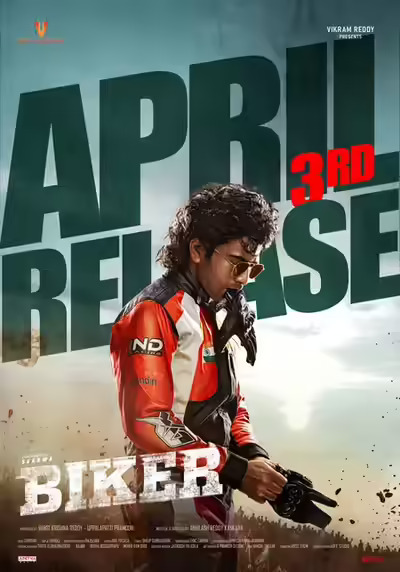
Biker (2026) Movie Review: Sharwanand Revs Up a Motocross Milestone
The sports drama genre in Indian cinema has historically been dominated by cricket and wrestling, often leaning heavily on rags-to-riches tropes. However, Abhilash Reddy Kankara’s Biker (2026) shifts the gears toward the adrenaline-fueled world of motocross. Released on April 3, 2026, the film serves as both a high-octane technical showcase and a grounded family drama, marking a significant departure from the standard commercial fare. Starring Sharwanand, Rajasekhar, and Malvika Nair, Biker attempts to balance the mud-splattered intensity of the track with the emotional friction of a father-son relationship.
Movie Overview and Production Details
| Aspect | Details |
| Title | Biker |
| Release Date | April 3, 2026 |
| Director | Abhilash Reddy Kankara |
| Lead Cast | Sharwanand, Rajasekhar, Malvika Nair |
| Supporting Cast | Atul Kulkarni, Brahmaji, Dayanand Reddy |
| Genre | Sports Action Drama |
| Runtime | 170 Minutes (2h 50m) |
| Music Director | Ghibran |
| Production House | UV Creations |
| Languages | Telugu, Tamil, Malayalam |
Full Plot Synopsis
The narrative follows Vikas Narayan (Sharwanand), a young man whose life revolves around the roar of an engine. Vikas isn’t just a rider; he is an artist on the dirt track, possessing a natural flair for the dangerous sport of motocross. However, his passion is the primary source of conflict in his household. His father, Bullet Sunil Narayan (Rajasekhar), was once a legendary biker whose career was cut short by a tragic accident—a trauma that has turned him into a protective, albeit stifling, patriarch.
Sunil wants Vikas to lead a stable life, far removed from the dirt and the risk of the stadium. This ideological clash forms the backbone of the first act. Amidst this tension, Vikas meets Andrea (Malvika Nair), whose support becomes his emotional anchor as he decides to go against his father’s wishes to participate in a high-stakes national motocross championship.
As Vikas rises through the ranks, he attracts the attention of Timmy (Atul Kulkarni), a ruthless corporate sponsor and former rival of his father, who sees Vikas as a tool for his own legacy. The second half of the film delves into the “National Dirt League,” where Vikas must overcome physical injuries, psychological warfare, and the weight of his father’s past. The climax is a grueling, multi-lap race that serves as a metaphor for Vikas’s journey to reclaim his family’s pride and forge his own identity.
Detailed Critique
Direction and Screenplay
Director Abhilash Reddy Kankara displays a keen eye for the technicalities of motocross. Unlike many Indian sports films that rely on “speed-up” editing to simulate intensity, Kankara opts for wide, sweeping shots that capture the physicality of the sport. The screenplay, while adhering to the classic “hero’s journey” structure, manages to inject freshness through its specific subculture. However, the 170-minute runtime is a hurdle; the middle portion leans heavily on romantic subplots that occasionally stall the narrative momentum.
Acting Performances
Sharwanand delivers perhaps the most physically demanding performance of his career. He portrays Vikas with a mix of quiet vulnerability and explosive energy on the bike. His transformation into a professional athlete is convincing, supported by genuine training evident in the racing sequences.
The real surprise, however, is Rajasekhar. Playing the aging “Bullet” Sunil, he brings a gravitas that elevates the film. The chemistry between him and Sharwanand—built on unsaid words and stern glances—provides the film’s emotional core. Malvika Nair is reliable as Andrea, though her character is occasionally relegated to the “supportive spectator” role typical of the genre.
Visuals and Sound
The cinematography by J. Yuvraj is the film’s strongest technical asset. Utilizing 4K high-speed cameras and POV mounts, the racing scenes are visceral. You can almost feel the grit and dust through the screen.
Ghibran’s score is a double-edged sword. While the ambient tracks during the emotional scenes are hauntingly beautiful, some of the high-intensity racing beats feel a bit repetitive. That said, the sound design—the specific thrum of a 450cc engine—is a treat for gearheads.
Strengths and Weaknesses
Strengths:
-
Authentic Motocross Representation: The film avoids over-the-top “superhero” stunts, focusing on real racing techniques and the physical toll of the sport.
-
The Father-Son Dynamic: The arc between Sharwanand and Rajasekhar is genuinely moving and avoids the typical melodrama.
-
Technical Excellence: Top-tier cinematography and stunt coordination (by Dhilip Subbarayan).
-
Originality: It introduces a sport rarely explored in mainstream Indian cinema.
Weaknesses:
-
Runtime: At nearly three hours, the film feels overstretched, particularly in the romantic and comedic subplots.
-
Predictable Tropes: The “evil corporate villain” and the “last-minute injury” are beats we have seen in Bhaag Milkha Bhaag and Sarpatta Parambarai.
-
Pacing: The transition from a family drama to a sports epic is somewhat jarring in the second act.
Final Verdict
Biker (2026) is a rugged, sincere, and visually spectacular entry into the sports drama hall of fame. While it doesn’t entirely reinvent the wheel—pun intended—it executes the “underdog” story with enough technical polish and emotional sincerity to keep audiences hooked. It is a must-watch for sports enthusiasts and those looking for a high-quality theatrical experience.
Rating: 3.5 / 5 Stars