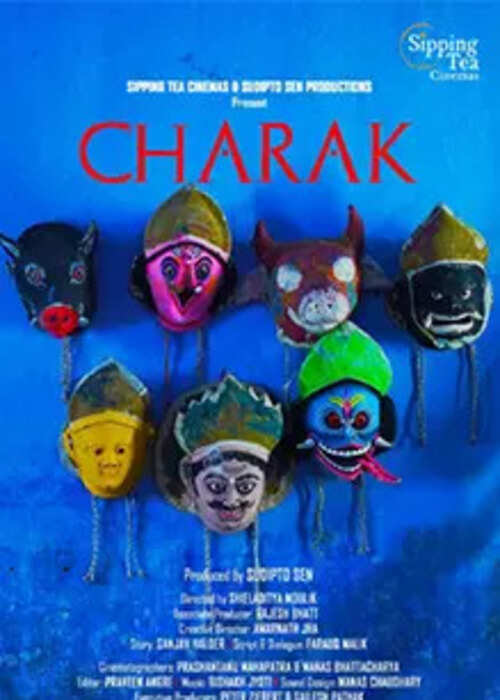
Charak: Fair of Faith (2026) Movie Review — A Chilling Descent into the Heart of Blind Devotion
The intersection of ancient rituals and modern morality has always been a fertile ground for Indian parallel cinema. In Charak: Fair of Faith (2026), director Shieladitya Moulik and producer Sudipto Sen (of The Kerala Story fame) deliver a visceral, atmospheric social thriller that dares to peek behind the curtain of “Ghor Aghor.” Set against the haunting backdrop of the annual Charak festival, the film is less about the celebration and more about the desperate, often dark, human impulses that fuel it.
Released on March 6, 2026, Charak is a film that demands iron nerves. It moves away from the explosive polemics of Sen’s previous directorial works, opting instead for a slow-burn investigation into how superstition can hijack the human psyche, leading to consequences that are as tragic as they are gruesome.
Movie Overview: Cast, Director, and Production Details
| Category | Details |
| Title | Charak: Fair of Faith |
| Release Date | March 6, 2026 |
| Director | Shieladitya Moulik |
| Producer | Sudipto Sen (Sipping Tea Cinemas / PEN Studios) |
| Cast | Anjali Patil, Sahidur Rahaman, Subrat Dutta, Shashi Bhushan |
| Genre | Social Thriller / Mystery / Drama |
| Runtime | 122 Minutes (2h 02m) |
| Language | Hindi |
| Certification | A (Adults Only) |
Full Plot Synopsis: The Price of a Miracle
The story is set in the rural enclave of Chandpur, a village currently gripped by the fervor of the upcoming Charak Puja—a traditional festival dedicated to Lord Shiva and Goddess Kali. The air is thick with the scent of incense and the dread of impending penance.
The narrative follows two parallel tracks involving childless couples. Subhash Sharma (Sahidur Rahaman), an educated police officer, and his wife Shefali (Anjali Patil) have been struggling with infertility for twelve years. Despite their rational outlook, the societal and familial pressure—spearheaded by Subhash’s mother—pushes them toward “jadi-booti” (herbal occult medicine) and ritualistic hope.
In contrast, we see Sukumar (Shashi Bhushan), a tribal villager and the head priest of the mela, who is also desperate for a child. His devotion is physical and extreme; he is the one who suspends himself from iron hooks in the air to appease the gods. His best friend is Bikash (Subrat Dutta), a gambler whose son, Birsa, is loved by the childless Sukumar as his own.
The tension snaps when a young boy named Kaanu is found murdered just days before the festival. Soon after, Birsa goes missing. As Subhash investigates, he uncovers a chilling village superstition: a belief that the “Ghor Aghoris” can grant the gift of a child to the barren, provided a human sacrifice is made. The film transforms into a race against time and a psychological battle, as Subhash must determine if his own community—and perhaps even those closest to him—have succumbed to a murderous religious mania.
Detailed Critique: Analysis of Themes and Execution
Direction and Screenplay
Shieladitya Moulik exhibits a restrained hand in his direction. Unlike many “social message” films that resort to loud melodrama, Moulik relies on atmospheric dread. The screenplay, written by Farauq Malik, is based on a short story by Sanjay Halder. While the pacing in the first half is deliberately sluggish to establish the “lived-in” feel of the village, it serves to make the eventual descent into the occult feel more grounded and terrifying.
Acting and Character Portrayals
The ensemble cast is the film’s strongest pillar.
-
Anjali Patil as Shefali delivers a nuanced performance, portraying a woman caught between her feminist ideals and the crushing weight of biological “failure.”
-
Sahidur Rahaman provides a steady, mature anchor as the officer who realizes that education is a thin veil against deep-seated cultural conditioning.
-
Shashi Bhushan is haunting as Sukumar. His physical transformation for the ritual scenes—showing the literal hooks in the flesh—is unsettlingly authentic.
-
Subrat Dutta and the child actors (Shankhadeep and Shoumal) add a layer of tragic innocence that makes the stakes feel incredibly high.
Visuals and Sound
The cinematography by Manas Bhattacharya and Prasantanu Mohapatra is spectacular. They capture the rocky terrains and pristine landscapes of rural India with a deceptive calm. The “documentary-style” footage of the Charak rituals—tantrics drinking from skulls and devotees piercing their bodies—is shot with a raw, unflinching lens that earned the film its ‘A’ rating.
The music by Bishakh Jyoti, specifically tracks like “Ghor Aghor,” utilizes folk and classical elements to create a visceral timbre. The background score doesn’t just accompany the scenes; it builds a sense of “foreboding doom” that lingers long after the credits roll.
Strengths and Weaknesses
Strengths
-
Authentic Milieu: The film feels like an ethnographic study of a specific, rarely-seen cultural practice.
-
Bold Subject Matter: It fearlessly tackles the dark side of faith, specifically human sacrifice and the exploitation of the desperate.
-
Technical Brilliance: High-quality cinematography and a haunting score elevate it above standard Bollywood thrillers.
Weaknesses
-
Pacing Issues: The first hour is extremely slow, which might alienate viewers looking for a traditional fast-paced “whodunit.”
-
Disturbing Imagery: Some scenes of ritualistic self-harm and occult practices are genuinely difficult to watch, limiting its appeal to a niche audience.
-
Dated Narrative: Certain plot beats regarding the “missing child” mystery feel somewhat predictable to seasoned thriller fans.
Final Verdict
Charak: Fair of Faith is a gut-punch of a movie. It is not “entertainment” in the traditional sense; it is a grim, thought-provoking exposé on the thin line between devotion and insanity. By placing the “affluent and educated” alongside the “tribal and desperate,” the film successfully argues that superstition is not a matter of class, but a product of human vulnerability.
It is a brave, if uncomfortable, cinematic experience that marks a significant milestone for producer Sudipto Sen and director Shieladitya Moulik.
Final Rating: 3.5/5 Stars