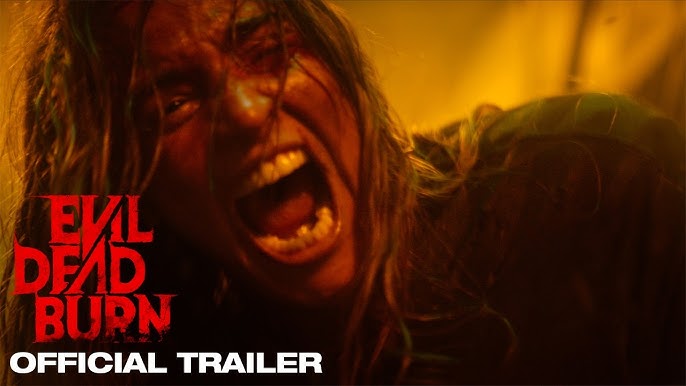
The Carnal Inferno of Grief: A Deep-Dive Review of Evil Dead Burn (2026)
Nearly five decades after Sam Raimi introduced audiences to the manic, low-budget hysteria of the original Necronomicon text, the Evil Dead franchise continues to prove remarkably resilient. The series has undergone a fascinating evolution, morphing from the slapstick-infused horror of the original sequels into an uncompromising, mean-spirited subgenre of modern studio horror. Following the urban escalations of Lee Cronin’s Evil Dead Rise (2023), French filmmaker Sébastien Vaniček—who gained international acclaim with his claustrophobic spider thriller Infested (2023)—takes the directorial reins for the sixth installment: Evil Dead Burn (2026).
Co-written by Vaniček and Florent Bernard, Evil Dead Burn relocates the franchise’s legendary demonic curse from high-rise city apartments back to an isolated, atmospheric forest setting. However, this is no mere rehash of the cabin-in-the-woods formula. Vaniček strips away the remaining threads of campy, Ash Williams-style humor, delivering a relentlessly violent, grueling study of intergenerational trauma and domestic hostility. It is a film that positions the Necronomicon Ex-Mortis not just as a book of dark magic, but as a cruel psychological mirror that weaponizes the fractured bonds of a family in mourning.
Evil Dead Burn (2026): Key Film Specifications
For industry tracking and cinematic reference, the technical and logistical framework of the film is outlined below:
| Technical & Logistical Metric | Film Specifications |
| Director | Sébastien Vaniček |
| Screenwriters | Sébastien Vaniček, Florent Bernard |
| Producers | Rob Tapert, Sam Raimi |
| Executive Producer | Bruce Campbell |
| Main Cast | Souheila Yacoub, Hunter Doohan, Tandi Wright, Luciane Buchanan, Erroll Shand, Maude Davey |
| Cinematography | Philip Lozano |
| Music Composer | Double Danger |
| Running Time | 109 minutes |
| U.S. Release Date | July 10, 2026 |
| Budget | $20 Million |
| Production Companies | New Line Cinema, Screen Gems, Ghost House Pictures |
| Distributors | Warner Bros. Pictures (Domestic), Sony Pictures Releasing (International) |
Detailed Plot Synopsis
The narrative trajectory of Evil Dead Burn positions its supernatural terrors within the immediate aftermath of a domestic tragedy. The film begins with a chilling prologue establishing the violent, Deadite-induced car accident that claims the life of Will (George Pullar), a volatile restaurant owner. Shortly thereafter, Will’s grieving French widow, Alice Price (Souheila Yacoub), travels to a remote forest holiday home to join her estranged in-laws for his formal cremation and memorial service.
The atmosphere in the home is instantly hostile. Will’s parents, Susan (Tandi Wright) and Edgar (Erroll Shand), openly blame Alice for the fatal crash. The broader family unit is equally strained, consisting of Will’s younger brother Joseph (Hunter Doohan), Joseph’s girlfriend Thya (Luciane Buchanan), and the family matriarch, grandmother Polly (Maude Davey), who is silently struggling with advanced dementia.
The structural integrity of the family completely implodes after Edgar privately visits the basement before the scheduled cremation. Unbeknownst to the rest of the family, Edgar has spent decades collecting obscure, occultic antiquities. Among his secret collection lies a familiar artifact bound in human flesh: the Necronomicon Ex-Mortis. When an old archival audio recording is inadvertently triggered, the ancient incantations awaken the parasitic Kandarian Demon.
The entity sweeps through the property, immediately claiming Edgar as its first host. Transformed into a sadistically cruel, mocking Deadite, Edgar turns on his family, sparking a rapid, domino-effect infection where the demonic plague spreads from one relative to the next. As the house transforms into a literal, blood-soaked death trap, Alice is thrust into a grueling, physical battle for survival. She must navigate the maze-like corridors of the estate while witnessing the monstrous deformation of the people her late husband loved most.
In-Depth Thematic and Cinematic Critique
Conceptual Themes: The Mutation of Intergenerational Grief
Vaniček and Bernard construct the central horror around the internal fractures of the Price family tree. Unlike earlier iterations of the franchise that targeted naive college students or random apartment tenants, Evil Dead Burn actively explores the horrors of intergenerational trauma and toxic family dynamics. The Deadites do not merely slash and mutilate; they weaponize the family’s deepest secrets, buried resentments, and maternal failures.
The revelation that the deceased Will harbored a legacy of violence and control suggests that aggression within this lineage is an inherited curse. The Necronomicon acts as a supernatural accelerant, taking the unspoken, toxic language of an abusive household and literalizing it into a physical assault of flying blood, shattered bones, and severed limbs. Alice’s desperate defense becomes an explicit metaphor for a survivor fighting her way out of a cycle of domestic persecution.
Direction and Pacing: A Kinetic Masterclass in Claustrophobia
Sébastien Vaniček brings the same breathless, kinetic style that defined Infested to the screen. While the film takes its time establishing the uncomfortable character dynamics in the opening act, once the demonic incantation is spoken, the pacing accelerates into an unyielding, breathless onslaught. Vaniček displays a brilliant understanding of spatial geography, turning the remote forest home into a shifting labyrinth. His camera actively tracks the characters through narrow hallways, behind drywall, and up into claustrophobic attic spaces, ensuring that the audience shares the physical entrapment of the protagonists.
Performances: Souheila Yacoub’s Physical and Emotional Triumph
As Alice, Souheila Yacoub delivers a star-making performance that easily earns a place alongside the franchise’s historic survivors. Yacoub anchors the film’s absurdly high levels of gore with a raw, grounded vulnerability. She portrays Alice not as an invulnerable action heroine, but as a profoundly exhausted widow who must summon a primal, terrifying survival instinct.
Hunter Doohan is equally compelling as Joseph, beautifully capturing the agonizing psychic shock of a younger brother forced to witness his mother and father morph into cackling demonic entities. Tandi Wright offers a unsettling, tragic performance as Susan, portraying a mother whose historical compliance with family toxicity ultimately manifests in her deeply unsettling Deadite persona.
Cinematography, Sound Design, and Practical Effects
Director of photography Philip Lozano rejects the clean, overly polished digital aesthetics of contemporary studio horror. Instead, his lens captures Evil Dead Burn in a gritty, high-contrast palette characterized by deep shadows, sickly domestic lighting, and thick, crimson textures. The film relies heavily on practical makeup, prosthetic appliances, and in-camera physical stunts, giving every wound and dismemberment a sickening sense of weight.
The auditory landscape of the film is equally brutal. The sound design maximizes internal physical discomfort, amplifying the wet crunch of fracturing bone, the screeching of metal, and the layered, multi-tonal vocal distortions of the possessed hosts. The industrial, abrasive score composed by the French electronic duo Double Danger avoids traditional orchestral jump-scare cues, opting instead for a mechanical, driving rhythm that elevates the film’s chaotic energy.
Narrative Strengths and Weaknesses
Strengths
-
Top-Tier Practical Craftsmanship: The film represents a monumental achievement for modern gorehounds, featuring incredibly creative, stomach-churning set pieces—most notably a sequence involving an industrial garden strimmer that serves as a brilliant homage to the series’ roots.
-
Oppressive Visual Atmosphere: Lozano’s cinematography and Vaniček’s sharp direction transform a singular location into a deeply claustrophobic and unpredictable battleground.
-
Compelling Central Performance: Souheila Yacoub provides a vital, emotionally resonant anchor that keeps the unrelenting cruelty of the plot from becoming entirely numbing.
Weaknesses
-
A Stark Absence of Levity: Dedicated purists who revere the franchise for its campy, eccentric comedy may find the film’s unyielding bleakness and straight-faced sadism physically and emotionally exhausting.
-
Underexplored Secondary Characters: Due to the rapid, aggressive spread of the Deadite contagion, several supporting family members are infected before their individual character arcs or psychological motivations can be meaningfully articulated.
Final Verdict
Evil Dead Burn is an unyielding, brilliantly crafted, and incredibly violent addition to the contemporary horror canon. By intentionally trading the franchise’s historic horror-comedy sensibilities for a pitch-black, psychologically devastating look at domestic trauma, Sébastien Vaniček has successfully delivered what is easily the most mean-spirited entry in the entire series. While its brutal, unremitting sadism may alienate casual moviegoers, its masterclass execution of practical effects, tight spatial direction, and fiercely committed leading performances make it an absolute must-watch for dedicated horror purists.