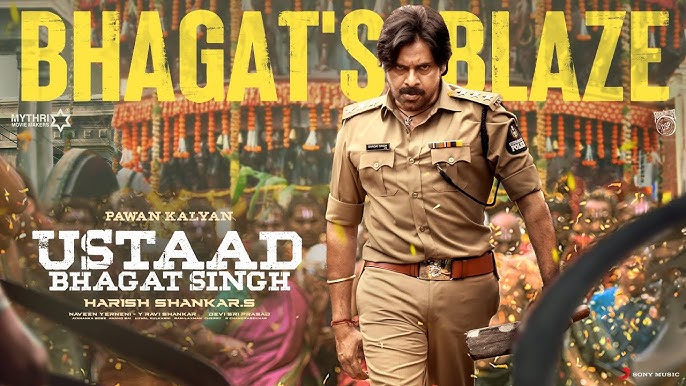
Power, Politics, and Prowess: An In-Depth Look at Ustaad Bhagat Singh
The landscape of Telugu cinema is often defined by its larger-than-life protagonists and the “masala” entertainer format. However, few upcoming projects have generated as much fervor as Ustaad Bhagat Singh. Reuniting the powerhouse duo of Pawan Kalyan and director Harish Shankar—the team behind the industry-shaking Gabbar Singh (2012)—this film is positioned as more than just an action flick; it is a cultural event.
As the production navigates the complexities of a high-profile cast and a politically active lead star, the anticipation surrounding its release has reached a fever pitch. In this comprehensive analysis, we explore the production details, the narrative inspiration, and the technical caliber of Ustaad Bhagat Singh.
Film Overview and Production Data
Before diving into the thematic elements, it is essential to understand the structural foundation of the film. Produced by Mythri Movie Makers, one of Tollywood’s most successful contemporary banners, the film boasts a high production value and a seasoned technical crew.
| Feature | Details |
| Title | Ustaad Bhagat Singh |
| Director | Harish Shankar |
| Lead Cast | Pawan Kalyan, Sreeleela, Ashutosh Rana, Gautami |
| Music Director | Devi Sri Prasad (DSP) |
| Cinematographer | Ayananka Bose |
| Editor | Chota K. Prasad |
| Production House | Mythri Movie Makers |
| Genre | Action / Political Drama |
| Language | Telugu |
Detailed Synopsis: A Tale of Identity and Justice
While Ustaad Bhagat Singh is officially an adaptation of the 2016 Tamil hit Theri, director Harish Shankar has been vocal about the extensive “Telugu-fication” of the script. The narrative departs significantly from the original to suit the “Power Star” persona of Pawan Kalyan.
The Protagonist’s Journey
The story follows Bhagat Singh, a headstrong and principled police officer assigned to the Old City of Hyderabad. Unlike a conventional cop, Bhagat Singh operates with a blend of irreverent wit and uncompromising violence against systemic corruption. He isn’t just a law enforcer; he is a disruptor of the status quo.
The Conflict
The plot thickens when Bhagat Singh’s path crosses with a powerful political antagonist (played by Ashutosh Rana). The friction is not merely criminal but ideological. The film explores the repercussions of an honest officer challenging a deep-seated political nexus. This leads to a personal tragedy that forces Bhagat into a period of exile or “undercover” life, where he must protect his daughter while grappling with his past.
The Resolution
The second half of the film focuses on the theme of “The Lion’s Return.” It portrays the inevitability of justice and the idea that a true leader—or “Ustaad”—cannot remain silent when the marginalized are oppressed. The climax is expected to be a high-octane confrontation that blends physical action with sharp, politically charged dialogue.
Deep Dive Critique and Analysis
1. Direction and Screenplay
Harish Shankar is a director who understands the pulse of the “mass” audience. His strength lies in writing dialogue that feels tailor-made for Pawan Kalyan’s unique delivery. In Ustaad Bhagat Singh, the screenplay is designed to be a “fan-service” masterpiece, yet it attempts to weave in social commentary regarding the current state of governance and civic duty.
2. Performance: The Pawan Kalyan Factor
For Pawan Kalyan, this role is a homecoming to the energetic, flamboyant characters he played in the early 2010s. Based on the promotional “glimpse” videos, his portrayal of Bhagat Singh is imbued with a sense of “swag” and authority. The actor’s real-life political stature adds a layer of meta-commentary to his lines, making every dialogue about “power” or “change” resonate doubly with the audience.
3. Visuals and Cinematography
Ayananka Bose, known for his slick visual style in films like DJ and Radhe Shyam, brings a glossy yet gritty aesthetic to the film. The choice of the Old City setting allows for a vibrant color palette—rich ambers, deep blues, and the dusty textures of Hyderabad’s historic lanes. The action choreography is expected to be stylized, moving away from gravity-defying stunts toward more impactful, grounded combat.
4. The Musical Landscape
The collaboration between Pawan Kalyan and Devi Sri Prasad (DSP) has historically resulted in chart-topping albums (Jalsa, Gabbar Singh, Attarintiki Daredi). For Ustaad Bhagat Singh, DSP is tasked with creating an anthem-like background score. The teaser music already suggests a heavy use of brass and percussion to elevate the protagonist’s “mass” entries.
Strengths and Potential Challenges
Strengths
-
The Director-Actor Synergy: The Harish Shankar-Pawan Kalyan duo has a proven track record of delivering blockbusters.
-
Production Quality: Mythri Movie Makers are known for not compromising on the scale, ensuring the film looks “big screen ready.”
-
Supporting Cast: The inclusion of veteran actors like Gautami and Ashutosh Rana provides a solid emotional and antagonistic anchor to the film.
-
Social Relevance: The film’s themes of standing up against corruption are perennially popular in Indian cinema.
Challenges
-
Comparison with the Original: Since it is an adaptation of Theri, comparisons with Vijay’s performance are inevitable. The challenge lies in making the story feel fresh for those who have already seen the original.
-
Production Delays: Due to the lead actor’s political commitments, the filming schedule has been fragmented. Maintaining tonal consistency across different filming phases will be crucial for the editor and director.
Final Verdict (Anticipation Rating)
Ustaad Bhagat Singh is not just a movie; it is a calculated move to solidify Pawan Kalyan’s image as a champion of the people. While it adheres to the tropes of commercial Telugu cinema—heavy dialogues, high-energy songs, and stylized action—it promises to execute them with a level of finesse that only a seasoned director like Harish Shankar can provide.
If the film manages to balance its political undertones with genuine emotional stakes, it is poised to be one of the highest-grossing films in the actor’s career. It is a “must-watch” for fans of the genre and a significant case study for how stardom and storytelling intersect in modern Tollywood.