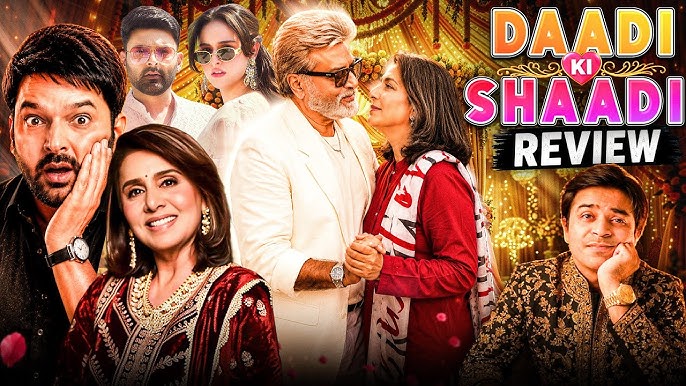
Daadi Ki Shaadi (2026) Movie Review, Cast, Story, Release Date & Full Analysis
Daadi Ki Shaadi (2026) is a Hindi-language family comedy-drama directed by Ashish R. Mohan. Featuring Neetu Kapoor, Kapil Sharma, Riddhima Kapoor Sahni, Sadia Khateeb, and R. Sarathkumar, the film blends humor, emotional family dynamics, and modern generational conflicts into a heartfelt Bollywood entertainer.
Released on May 8, 2026, the movie has generated strong audience attention for its refreshing storyline centered on an elderly woman’s unexpected desire to remarry. With emotional storytelling, chaotic family situations, and socially relevant themes, Daadi Ki Shaadi positions itself as one of the most talked-about Bollywood family films of 2026.
Daadi Ki Shaadi (2026) Quick Movie Overview
| Movie Title | Daadi Ki Shaadi |
|---|---|
| Release Date | May 8, 2026 |
| Language | Hindi |
| Genre | Comedy, Drama, Family |
| Director | Ashish R. Mohan |
| Runtime | 2 Hours 35 Minutes |
| Main Cast | Neetu Kapoor, Kapil Sharma, Riddhima Kapoor Sahni, Sadia Khateeb, R. Sarathkumar |
| Production Houses | BeingU Studios, RTake Studios, Shimla Talkies Production |
| OTT Platform | Expected on Netflix after theatrical run |
| Country | India |
Daadi Ki Shaadi (2026) Plot Summary
The story revolves around a lonely grandmother whose innocent social media announcement about her upcoming marriage creates complete chaos within her family. What initially appears to be a misunderstanding slowly turns into an emotional journey that exposes unresolved family tensions, generational disagreements, and hidden insecurities.
Neetu Kapoor plays the central matriarch with warmth and emotional depth. Her decision shocks every member of the household, especially younger relatives already dealing with wedding preparations of their own. Kapil Sharma’s character Tony Kalra becomes the emotional bridge trying to restore balance within the fractured family setup.
As the story unfolds, the film explores themes of companionship in old age, social judgment, second chances, and the changing perception of marriage in Indian society. The screenplay balances comedy with emotionally grounded moments, allowing the family drama to feel relatable without becoming overly melodramatic.
The film gradually transitions from light-hearted confusion to heartfelt emotional reconciliation, making it both entertaining and emotionally engaging for mainstream audiences.
Why Daadi Ki Shaadi Stands Out in Bollywood Family Cinema
Bollywood has often focused on youthful romance and conventional family dramas. Daadi Ki Shaadi breaks that pattern by putting an elderly woman at the center of the narrative.
This unique storytelling choice gives the film freshness and emotional originality. Instead of treating older characters as side elements, the film allows its senior protagonist to drive the emotional and narrative momentum.
The movie also addresses how Indian families react when elderly members prioritize personal happiness over social expectations. This emotional conflict becomes the foundation of the story’s strongest moments.
Neetu Kapoor Delivers One of Her Most Emotional Performances
Neetu Kapoor carries the film with remarkable confidence and sincerity. Her portrayal feels natural, graceful, and emotionally layered throughout the movie.
She successfully captures both the vulnerability and emotional strength of a woman seeking companionship later in life. The performance avoids exaggeration and instead relies on understated emotional expressions.
Her chemistry with the ensemble cast strengthens several emotional scenes, particularly those involving family confrontations and moments of quiet reflection.
Many viewers will likely consider this one of Neetu Kapoor’s strongest performances in recent years.
Kapil Sharma Surprises With Balanced Comic Timing
Kapil Sharma once again proves that he can successfully transition from television comedy to emotionally grounded cinematic performances.
While the film naturally gives him space for humor, he avoids turning the character into caricature. His comic timing remains effective without overshadowing the emotional depth of the narrative.
Tony Kalra serves as the audience’s emotional anchor within the chaos, and Kapil handles the responsibility convincingly. His interactions with Neetu Kapoor create several genuinely entertaining and heartfelt scenes.
Riddhima Kapoor Sahni Makes a Confident Bollywood Debut
One of the film’s major highlights is the acting debut of Riddhima Kapoor Sahni. Despite industry attention surrounding her debut, she manages to hold her own within a large ensemble cast.
Her screen presence feels composed and natural. While her role is not the emotional centerpiece, she contributes effectively to the family dynamic and brings freshness to the film.
Considering this is her first major acting role, the performance is confident and surprisingly mature.
Direction and Screenplay Analysis
Director Ashish R. Mohan keeps the storytelling accessible for family audiences while addressing emotional themes with sensitivity.
The film’s biggest strength lies in maintaining tonal balance. It moves between comedy and emotional drama without abrupt shifts. Family conflicts feel realistic rather than exaggerated, helping audiences emotionally invest in the characters.
The screenplay occasionally becomes predictable in the second half, especially during reconciliation scenes. However, the emotional sincerity of the performances prevents the narrative from losing momentum.
The dialogues feel conversational and rooted in middle-class Indian family culture, which enhances relatability.
Cinematography and Visual Presentation
The film uses vibrant visuals and warm color palettes to create a comforting family atmosphere.
The cinematography complements the emotional tone effectively, especially during scenes involving family gatherings and wedding preparations. Several sequences shot in Chandigarh and Shimla provide visual richness without distracting from the story.
The visual style remains simple but polished, matching the emotional nature of the narrative.
Music and Background Score
The soundtrack supports the emotional tone of the movie rather than dominating it.
The background score helps elevate emotional scenes without becoming overpowering. Wedding songs and family celebration tracks add energy to lighter sequences, while softer musical compositions strengthen emotional moments.
The music fits naturally into the narrative structure and maintains the film’s family-friendly appeal.
Strengths of Daadi Ki Shaadi (2026)
1. Unique Story Concept
The idea of centering a Bollywood family film around an elderly woman’s remarriage feels refreshing and emotionally meaningful.
2. Strong Ensemble Performances
Neetu Kapoor and Kapil Sharma deliver emotionally grounded performances, while the supporting cast contributes effectively throughout the film.
3. Emotional Family Dynamics
The movie successfully captures realistic family tensions, generational disagreements, and emotional insecurities.
4. Balanced Humor and Emotion
The film avoids excessive melodrama and maintains a pleasant emotional rhythm from start to finish.
5. Relatable Themes
The themes of companionship, loneliness, acceptance, and family reconciliation resonate strongly with Indian audiences.
Weaknesses of Daadi Ki Shaadi (2026)
Predictable Narrative Structure
Some emotional developments follow familiar Bollywood family-drama patterns, reducing unpredictability in the second half.
Slightly Long Runtime
At 155 minutes, the film occasionally feels stretched, especially during repetitive family conflict scenes.
Limited Character Depth for Supporting Roles
Certain supporting characters could have benefited from stronger emotional arcs and additional screen development.
Final Verdict
Daadi Ki Shaadi (2026) is a warm-hearted Bollywood family entertainer that successfully combines comedy, emotional storytelling, and socially relevant themes.
The film stands out primarily because of its refreshing central idea and sincere performances. Neetu Kapoor leads the narrative with emotional elegance, while Kapil Sharma provides both humor and emotional balance.
Although the screenplay occasionally becomes formulaic, the film’s emotional sincerity and relatable family dynamics make it an enjoyable theatrical experience for family audiences.
For viewers looking for a light-hearted yet emotionally meaningful Bollywood drama, Daadi Ki Shaadi delivers an entertaining and heartfelt cinematic experience.
Daadi Ki Shaadi (2026) Rating
| Category | Rating |
|---|---|
| Story | 4/5 |
| Performances | 4.5/5 |
| Direction | 4/5 |
| Music | 3.5/5 |
| Emotional Impact | 4.5/5 |
| Overall Rating | 4/5 |
Frequently Asked Questions About Daadi Ki Shaadi (2026)
Is Daadi Ki Shaadi based on a true story?
No, the film is a fictional family comedy-drama.
Who plays the lead role in Daadi Ki Shaadi?
Neetu Kapoor plays the central lead role in the film.
Is Riddhima Kapoor Sahni making her Bollywood debut in Daadi Ki Shaadi?
Yes, this marks Riddhima Kapoor Sahni’s acting debut in Bollywood films.
What genre is Daadi Ki Shaadi?
The film belongs to the comedy-drama and family entertainment genre.
Where can Daadi Ki Shaadi be watched after theatrical release?
The movie is expected to stream digitally after its theatrical run.