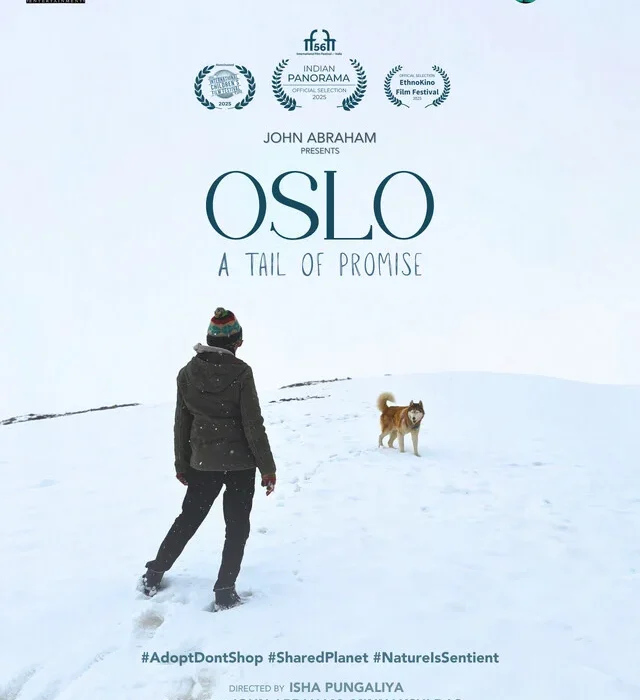
Oslo: A Tail of Promise (2026) Movie Review – A Moving Documentary About Loyalty, Healing, and the Human–Animal Bond
Oslo: A Tail of Promise (2026) is a heartfelt documentary that explores the profound connection between humans and animals through the story of a Siberian husky named Oslo. Directed by Isha Pungaliya and produced with the involvement of John Abraham, the film blends emotional storytelling with themes of compassion, resilience, and the healing power of companionship.
Premiering at the International Film Festival of India (IFFI) before wider screenings, the documentary presents a deeply personal narrative that highlights how animals can shape human lives in unexpected ways. With its intimate approach and sincere storytelling, Oslo: A Tail of Promise stands as a touching tribute to the enduring bond between people and their pets.
Film Overview
| Film Title | Oslo: A Tail of Promise |
|---|---|
| Release Year | 2026 |
| Genre | Documentary |
| Director | Isha Pungaliya |
| Producers | John Abraham, Amey Gosavi |
| Main Cast | Oslo Khanwalkar, Pooja R. Bhale |
| Language | English |
| Runtime | 94 minutes |
| Country | India |
| Production Companies | JA Entertainment, Protecterra Ecological Foundation, Vaanar Nirmit |
| Premiere | International Film Festival of India (IFFI) |
The documentary centers on the relationship between Pooja R. Bhale, an environmental advocate and founder associated with ecological and animal welfare initiatives, and Oslo, a Siberian husky whose presence transforms lives around him.
Full Plot Synopsis
A Chance Encounter
The story of Oslo: A Tail of Promise begins with a wounded Siberian husky named Oslo, whose life changes when he crosses paths with Pooja R. Bhale. At the time, Pooja is searching for direction and emotional grounding in her own life. Her encounter with the dog appears accidental at first, but it quickly develops into a meaningful relationship.
Oslo, with his striking copper-colored fur and gentle demeanor, becomes more than just a companion. He represents hope and resilience—qualities that Pooja herself needs as she navigates personal challenges and her mission to advocate for environmental protection and animal welfare.
From City Streets to Natural Landscapes
The documentary follows their journey across various environments, beginning in urban settings and expanding into natural landscapes that emphasize the film’s ecological themes. As Pooja continues her work through environmental organizations, Oslo accompanies her, becoming an emotional anchor and a symbol of compassion.
Through observational storytelling, the film captures everyday moments—walks, quiet interactions, and shared experiences—that gradually reveal the emotional depth of their bond.
Transformation Through Connection
As their relationship grows, Oslo becomes a catalyst for transformation. Pooja’s perspective on life, purpose, and responsibility toward animals evolves through her experiences with him. The dog’s presence inspires reflection on the importance of empathy and interspecies connection.
In parallel, the documentary highlights broader issues surrounding animal welfare and ecological responsibility. The story subtly expands from a personal tale into a reflection on humanity’s relationship with the natural world.
A Legacy of Love
The film ultimately positions Oslo as more than a pet; he becomes a symbol of unconditional love and spiritual guidance. The narrative frames animals as silent teachers capable of influencing human lives in profound ways.
By the end of the documentary, Oslo’s story becomes a testament to resilience and emotional healing, leaving viewers with a powerful message about compassion, responsibility, and the transformative power of companionship.
Direction and Documentary Style
Director Isha Pungaliya adopts a contemplative and intimate approach to storytelling. Rather than relying on dramatic narration or heavy exposition, the documentary focuses on natural moments and observational filmmaking.
This style allows the emotional connection between Pooja and Oslo to emerge organically. The camera frequently lingers on quiet interactions—moments of trust, playfulness, and comfort that reveal the depth of their relationship.
Pungaliya’s direction avoids sensationalism, instead emphasizing sincerity and authenticity. The film feels less like a structured documentary and more like a personal journal captured through cinematic language.
This restrained approach aligns well with the film’s themes, encouraging viewers to reflect rather than simply observe.
Themes and Emotional Core
1. The Healing Power of Animals
At its heart, Oslo: A Tail of Promise explores how animals can provide emotional healing. Oslo becomes a source of stability and comfort for Pooja, demonstrating the therapeutic potential of animal companionship.
The documentary suggests that relationships with animals can offer emotional clarity and unconditional acceptance—qualities that are sometimes difficult to find in human relationships.
2. Compassion and Responsibility
Another key theme is humanity’s responsibility toward animals and the environment. Pooja’s work in ecological advocacy highlights the interconnectedness of animal welfare and environmental protection.
The film subtly advocates for a more compassionate approach to how humans coexist with animals and nature.
3. Spiritual Connection
The narrative also touches on spiritual dimensions of human–animal relationships. Oslo is portrayed not merely as a companion but as a guide who helps illuminate deeper truths about empathy, patience, and love.
This theme gives the documentary a reflective tone that elevates it beyond a conventional pet story.
Performances and Real-Life Presence
Because Oslo: A Tail of Promise is a documentary, the performances are essentially real-life portrayals.
Pooja R. Bhale
Pooja serves as the emotional center of the film. Her sincerity and vulnerability provide the narrative’s grounding. She speaks openly about her struggles, motivations, and the lessons she learns through her relationship with Oslo.
Her authenticity helps the film maintain emotional credibility.
Oslo the Husky
Oslo himself becomes the documentary’s most compelling presence. The film captures his expressive behavior and calm demeanor, presenting him as a living embodiment of the themes the documentary explores.
His natural charisma and gentle personality make him an unforgettable subject.
Cinematography and Visual Style
The film’s visual style emphasizes nature and atmosphere. Landscapes and natural environments are frequently used to mirror the emotional journey of the characters.
Wide shots of open spaces contrast with intimate close-ups of Oslo and Pooja, reinforcing the theme of connection between humans and the natural world.
The cinematography remains understated but effective, focusing on authenticity rather than stylized imagery.
Sound and Musical Atmosphere
The sound design of the documentary complements its reflective tone. Ambient sounds—wind, footsteps, distant wildlife—play an important role in creating immersion.
Music is used sparingly, often appearing during emotional transitions or reflective sequences. This restrained use of score allows the natural atmosphere to remain the film’s primary auditory element.
Strengths of Oslo: A Tail of Promise
1. Genuine Emotional Storytelling
The documentary’s authenticity makes its emotional moments feel sincere rather than manufactured.
2. Unique Perspective on Human–Animal Relationships
Instead of presenting animals as passive companions, the film portrays Oslo as an active participant in the emotional journey.
3. Thoughtful Themes
The narrative connects personal storytelling with broader ideas about ecological awareness and compassion.
4. Intimate Direction
Isha Pungaliya’s observational style enhances the film’s emotional impact.
Weaknesses of the Film
1. Slow Narrative Pace
The contemplative style may feel slow for viewers expecting a traditional documentary structure with stronger narrative progression.
2. Limited Scope
While the story is emotionally engaging, it remains highly focused on a single relationship, which may leave some viewers wanting a broader exploration of animal welfare topics.
3. Minimal Context
The documentary prioritizes emotion over detailed background information, which could limit its educational depth.
Final Verdict
Oslo: A Tail of Promise is a heartfelt documentary that celebrates the extraordinary bond between humans and animals. Through its intimate storytelling and contemplative style, the film explores themes of healing, compassion, and environmental responsibility.
While its slow pacing and narrow focus may not appeal to all viewers, the documentary succeeds in delivering a moving tribute to the emotional impact animals can have on human lives.
Ultimately, the film reminds audiences that sometimes the most profound lessons about empathy and resilience come from the quiet companionship of animals.
Rating: 7.5/10